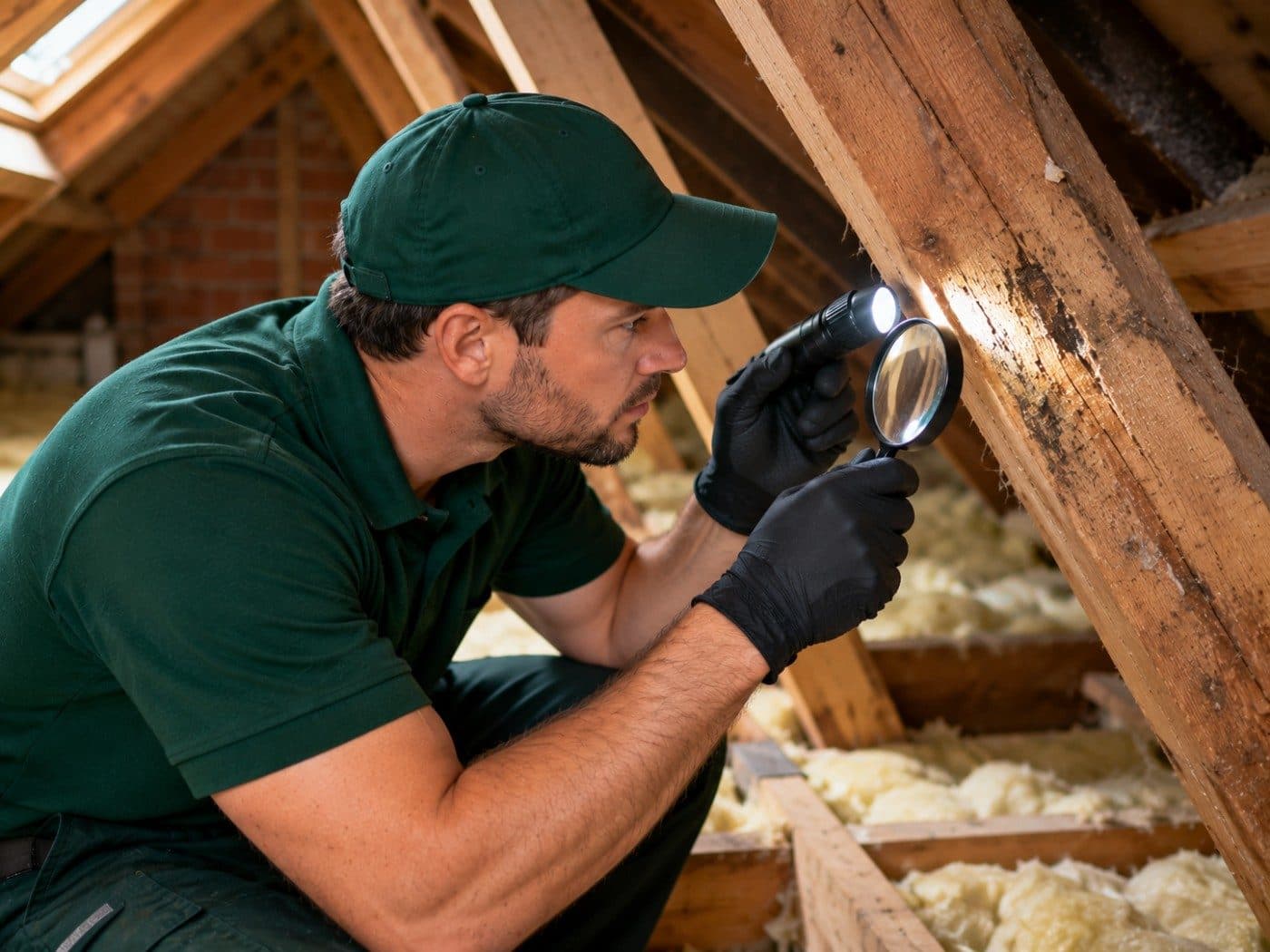
Key Takeaways:
- Rat droppings are blunt, 10–20mm cylinders found near food or sheltered runs.
- Audible scurrying in cavity walls is most pronounced during the late evening.
- Greasy smear marks indicate established travel corridors along skirting and pipes.
- Professional eradication combines controlled baiting with structural ingress sealing.
Why Early Detection Matters
Rats are secretive, nocturnal creatures that avoid open spaces whenever possible. Often, a breeding colony is already established before a live animal is ever spotted in plain daylight.
Because rats must gnaw constantly to trim their continuously growing incisors, unaddressed activity can cause extensive damage to timber beams, plastic water pipes, and electrical cables—creating significant fire and flood hazards.
Physical Clues to Look For
Careful inspection of quiet, dark areas in your property will often reveal telltale signs long before an actual sighting occurs.
1. Droppings
Brown rat droppings are dark brown, spindle-shaped, and blunt-ended, measuring between 10mm and 20mm in length. Fresh droppings are soft and moist; older droppings are dull and brittle.
2. Smear Marks (Rub Marks)
Because rats have greasy coats and travel along identical paths repeatedly, they leave dark, oily smudges against skirting boards, pipes, and wall junctions.
3. Audible Scratching and Scurrying
Scratching sounds inside cavity walls, suspended ceilings, or beneath floorboards—most audible in the quiet of the night—are prime indicators of rodent highways.
4. Burrows and Excavations
Look around external foundation edges, decking, compost bins, and drainage inspection covers for clean, circular holes approximately 6cm to 9cm in diameter.
Immediate Steps and When to Call Professionals
If you discover evidence of rats, avoid laying loose retail poisons in accessible areas where children or non-target animals could reach them.
Store all open food items in chew-proof glass or metal containers, clear spilt bird food from garden areas, and contact a professional pest-management technician to map entry routes.
Never handle rat droppings or dead rodents with bare hands. Wear protective gloves and a particulate dust mask, and sanitize contaminated surfaces with a suitable disinfectant spray.
Related Professional Service
Rat Control
Discreet, methodical rat eradication, entry point identification, and structural proofing advice.