Safe & Effective Wasp Nest Treatments
Common wasps (Vespula vulgaris) and German wasps (Vespula germanica) build papery nests in roof spaces, wall cavities, garden sheds, and under eaves. As summer progresses into early autumn, colonies can grow to over 5,000 agitated individuals capable of inflicting painful and potentially anaphylactic stings.
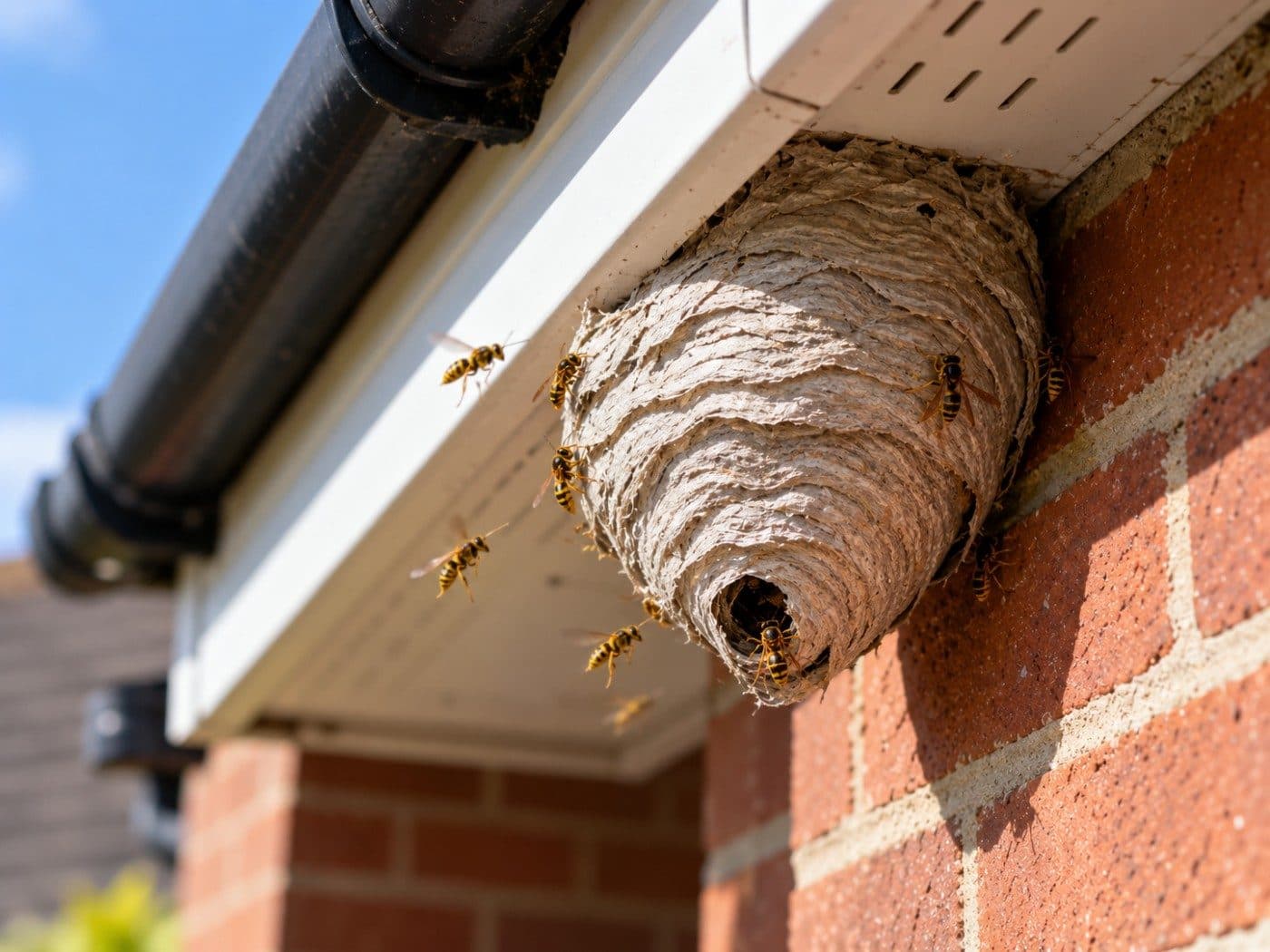
Common Signs of an Infestation
Look for these physical indicators around your property:
- A continuous stream of wasps entering and exiting a specific hole in eaves, tiles, or brickwork
- A visible grey, papery sphere growing in the loft, garage, outbuilding, or shrubbery
- Loud, rhythmic buzzing or scratching sounds coming from ceiling plasterboard
- Large numbers of disoriented wasps appearing inside upstairs bedrooms or living rooms
- Increased aggressive wasp swarming around bins and outdoor dining areas
Potential Contributing Causes
Environmental factors and structural vulnerabilities that attract this pest:
- Fertilized queen wasps emerging from hibernation in spring seeking warm, sheltered voids
- Unsealed gaps beneath fascia boards, ridge tiles, and open air vents
- Abundant garden food sources such as fallen fruit, aphid honeydew, and exposed sweet rubbish
When Professional Assistance May Be Appropriate
Our Methodical Inspection Approach
We observe flight patterns from a safe distance, determine nest ingress coordinates, and assess structural access without disturbing the defensive colony.
Targeted Treatment Methods
Using protective bee suits and specialized telescopic pressurized injection lances, we introduce a micro-fine insecticidal powder or spray directly into the nest entrance. The wasps carry the active agent throughout the nest, neutralizing the colony within hours.
Domestic Considerations
We instruct family members and pets to remain indoors with windows and doors shut during and immediately following treatment while worker wasps return.
Commercial Considerations
For outdoor hospitality venues, beer gardens, and nurseries, we arrange out-of-hours treatments to minimize staff and customer exposure.
Prevention and Long-Term Proofing Advice
Never attempt to block a wasp nest entrance while active. Wasps will chew through interior plasterboard into living rooms if their exit is sealed.
Wasp Control FAQs
In most situations, treated nests in voids or lofts are neutralized and left inert, as wasps never re-use an old nest. If an exposed nest in a shed or loft is accessible, physical removal can be arranged once completely inactive.
Related Pest Services
Request a Quote for Wasp Control
Submit details regarding your property and observed signs. We confirm service availability within our confirmed UK coverage radius.